
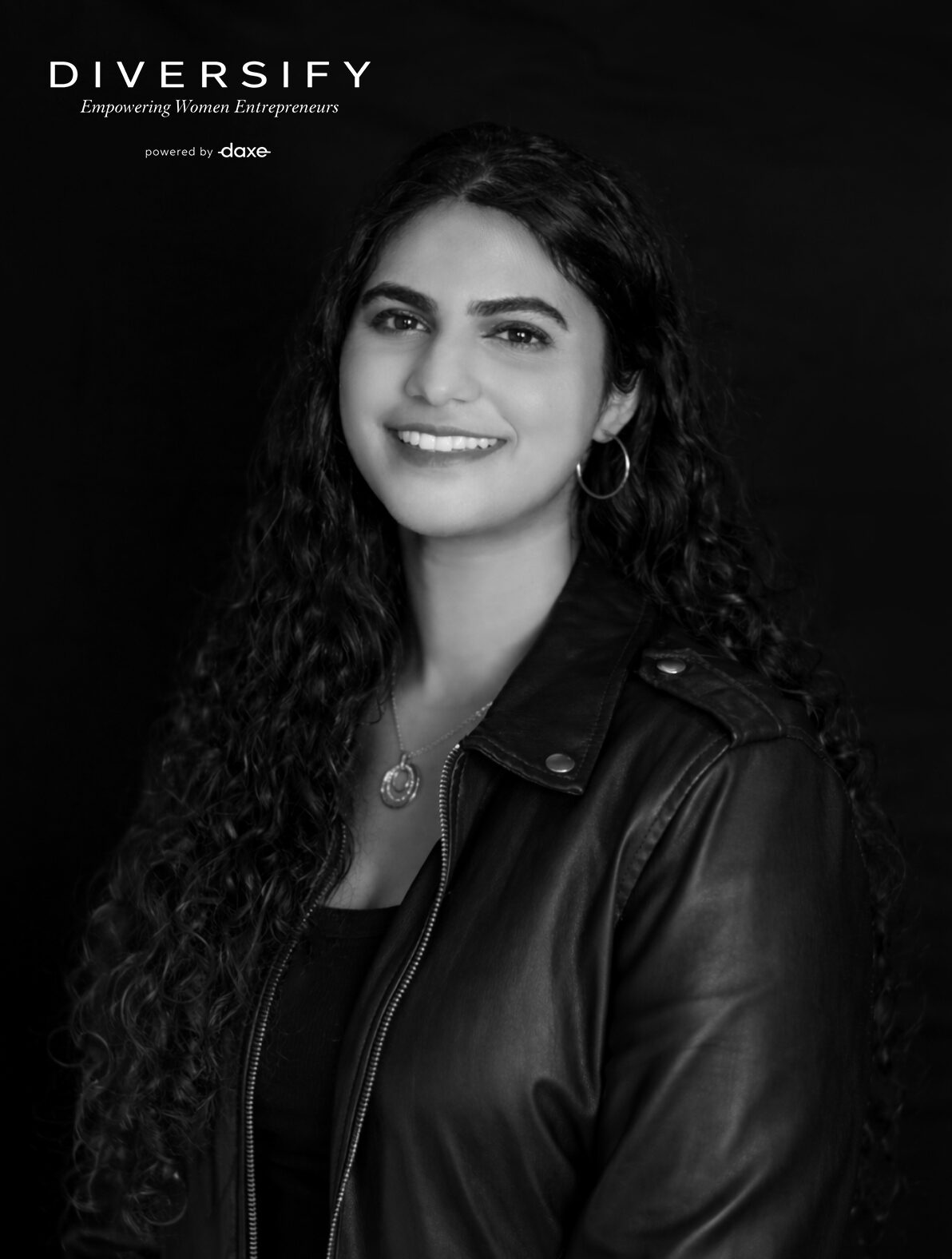
Portrait No. 001
Amrita Bhasin
Founder
Sotira
My inspiration for founding Sotira goes back to my experience visiting my extended family in India in early childhood and observing piles of clothing pile up outside of factories and warehouses in town, effectively creating permanent landfills. I had the privilege to grow up in the US where the average person purchases clothing and merchandise at retailers and barely thinks about how these items are produced and the sacrifices that those in the Global South face as a result of rising overconsumption and fast fashion in the West. India is a country where millions of people lack clean water and experience chemical waste, carbon emissions, pollution and contamination in water and the environment in part due to inventory waste and overproduction. Witnessing retail waste of this scale from Western fashion brands was transformative for me as a young woman; this completely altered the way I think about consumption and climate.
Chapter I
The toughest challenges you've faced as a founder.
I am often one of few woman of color at supply chain conferences that I attend. Supply chain is an industry that is not particularly diverse yet it controls so many important processes in America from how our groceries are kept fresh during delivery to how our packages are routed from around the world to our doorstep. I am passionate about building AI in supply chain and am proud that we have raised over $2 million in VC funding to build our vision of a more circular world. I have been invited to speak on national and international broadcast networks including CBS, Fox, ABC, Scripps, and CGTN, and have been profiled in Forbes, TechCrunch, and Business Insider. I am regularly quoted as an expert by leading publications such as Reuters, Bloomberg, Wired, Fortune, CNBC, Glossy, Huffington Post, Sourcing Journal, Reader’s Digest, Modern Retail, AP, Yahoo Finance, and FreightWaves. I have spoken at leading conferences and trade shows including TechCrunch Disrupt 2024, Home Delivery World 2025, HumanX 2025, ReTHINK Retail 2025, Climate Week 2025, and Groceryshop 2025. I was a delegate speaker at the 2025 One Young World Summit in Munich, Germany, and was invited to attend the 2025 Clinton Global Initiative Annual Meeting, where I spoke with former President Bill Clinton about my work. I am an upcoming speaker at Manifest 2026, Web Summit 2026, South by Southwest 2026, Retail AI Club 2026, and Food Waste Summit 2026. I was a 1st place winner at Shoptalk 2025 and a 1st place winner at the Reverse Logistics Conference and Expo 2025. I have been recognized by the State of California and StopWaste for contributions to reducing enterprise waste. I was selected as a 776 Fellow by Alexis Ohanian, the founder of Reddit, for my impact in the climate space. One of the toughest challenge has been building AI in such an antiquated industry. AI has the potential to disrupt and completely change how business is conducted yet logistics and supply chain are legacy industries that are lagging in automation. They are also leapfrog industries where AI can really take operations to the next level if implemented properly. We're creating custom AI powered data insights out of a process that may be handwritten by many of our customers. I am fascinated by how much more AI can impact and propel an old school industry forward. Antiquated industries do not get enough attention and they desperately need disruption and innovation. I spend every day working with truckers on employing AI to pack and move freight more efficiently. Many of the people I work with have never heard of ChatGPT. It is an intellectual challenge to build tech for an industry that is largely still pen and paper.
Chapter II
Your vision.
Unsold inventory is an 800 billion dollar problem. 25% of all inventory at every level of the supply chain is overstock and much of it ($163 billion or 6 billion pounds worth of inventory annually) ends up in landfills. Surplus inventory is one of the biggest climate problems in logistics and retail and this inventory, everything from apparel to furniture to makeup, disproportionately pollutes the Global South. I was inspired to create a more circular world where overstock is not destroyed and does not pollute the Global South and is instead redistributed within the system. I founded Sotira to reroute overstock from landfills and I am proud of the success we have had in convincing billion dollar companies to change their behavior around waste.
Chapter III
The impact you want to leave behind — for your industry, your community, and the women who come next.
The impact I want to leave behind is that companies can make money and be sustainable. I run a social enterprise which serves manufacturers and brands on their overstock. I have learned that sustainability as a sole pitch to corporates only goes so far; having a process in place for companies to be more climate friendly and make money at the same time is much more compelling and leads to true adoption of new sustainable processes. These insights as the founder of a social enterprise enable me to hold an especially unique perspective on how to cultivate change making from within a corporation.