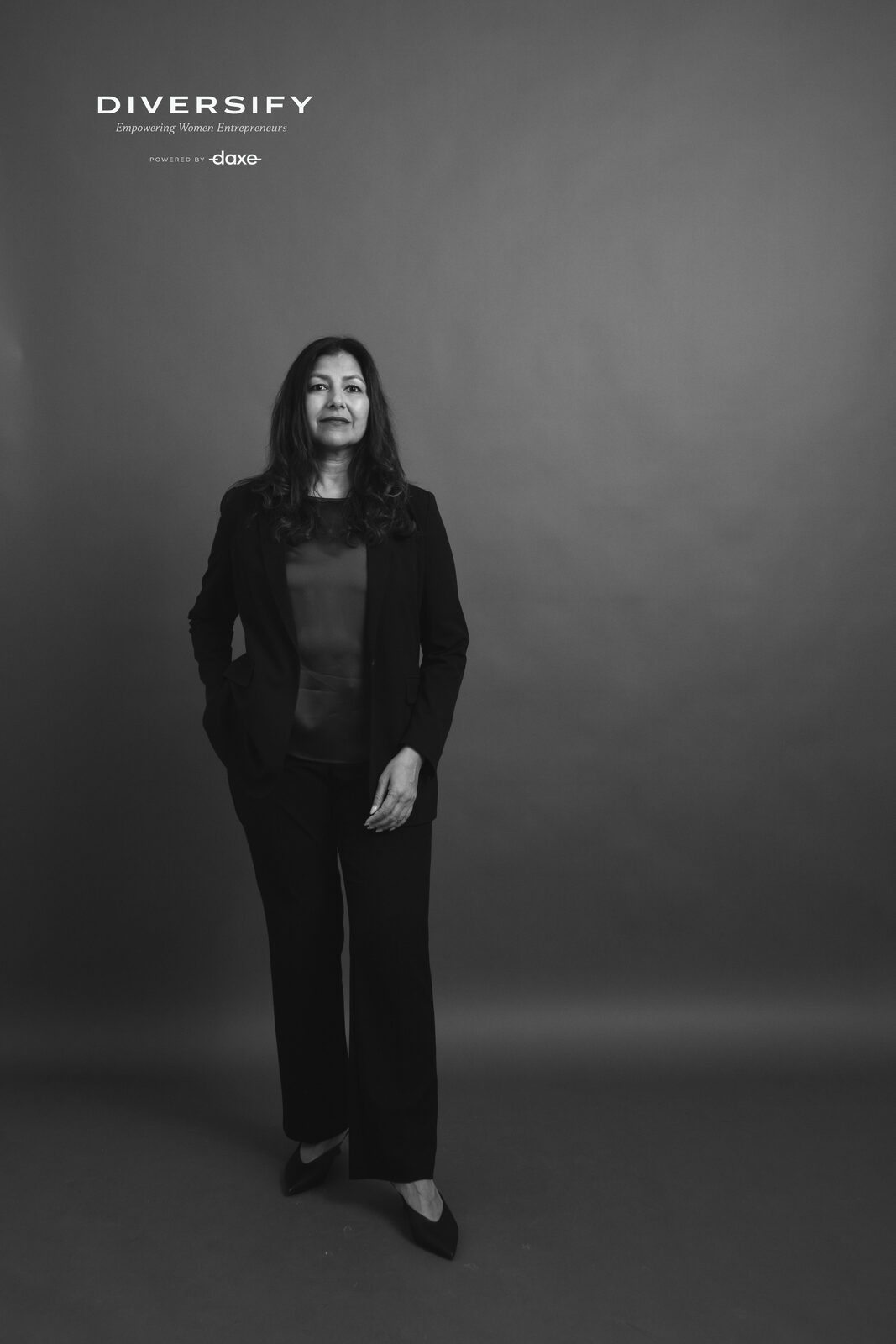
Portrait No. 001
Anjali Gupta
Founder & CEO
ANTA Biotech
Raised — $2M SBIR Now raising 1st round of private capital
ANTA Biotech is an early-stage startup that I founded in 2023 to engineer lab tools for 21st century biology. Biology doesn’t just happen in the lab. It’s all around us – in the forest, the desert, ocean, rivers, and even on a space station. I always wanted to be an entrepreneur but needed a compelling idea. Then, I saw a critical gap when I worked on a space mission, took a giant leap and started ANTA which means “the edge” in Sanskrit. After more than 250 customer discovery interviews, I realized that even though this technology was inspired by and for Space, its true value is here on Earth from remote communities and extreme environments to lab benches. Why me? Because I have the tech, the team, the knowledge, and the grit to bring my vision to reality. Now, because Space is no longer just science-fiction but a burgeoning frontier for innovation.
In her words
“As one of three girls born in India, I never imagined that one day, I would be inventing the future, literally.”
Chapter I
The toughest challenges you've faced as a founder.
For me it’s always been imposter syndrome. I’ve never felt smart enough or confident enough. I’ve always felt pinned down under someone else’s thumb. I always felt like I needed permission to spread my wings and fly. Then in 2023 I gave myself permission to take a leap. I started this company from the ground up. I created something from nothing. I built the team. I learned through many trials and errors. When I landed my first SBIR funding from the prestigious NSF (with a nearly perfect score after the first try!) I couldn’t believe it. I then hired scientists and engineers. From my previous experiences I had learned what not to do as a boss. I’m proud to say that I’ve created a culture of trust, respect, and most importantly belonging. Now I’m on my way to raising my first round of private capital. As one of three girls born in India, I never imagined that one day, I would be inventing the future, literally. The journey has just begun, but I no longer feel like an imposter. I belong just as much as anyone else.
Chapter II
Your vision.
Our genetic code holds the secrets to our existence, yet it’s still pretty hard to access that code. We’re building a tool that will make it easier and faster to extract DNA anywhere on Earth and in Space, yes outer Space. My vision is to speed up and automate some of the most mundane parts of research and also make these tools portable and available to anyone. I want to democratize access to science by building small, easy to use lab instruments that can be used by any non-science person. You can unlock the secrets of the universe only when you have the right tool. I want to give everyone access to this tool so that they identify diseases more quickly or help make better medicines or even be inspired to become a scientist.
Chapter III
The impact you want to leave behind — for your industry, your community, and the women who come next.
I want my legacy to be that biology is no longer confined to privileged labs or privileged people. Thirty years from now, I see a world where a kid in a remote village or a researcher at the bench or an astronaut on the Moon are all doing routine high quality genomics because the infrastructure I helped build made sample prep invisible, reliable, and ubiquitous. For women and girls, especially Brown girls, I want my story to prove that a seven-year-old immigrant from India can stand at the edge of Space and biotech and still belong.