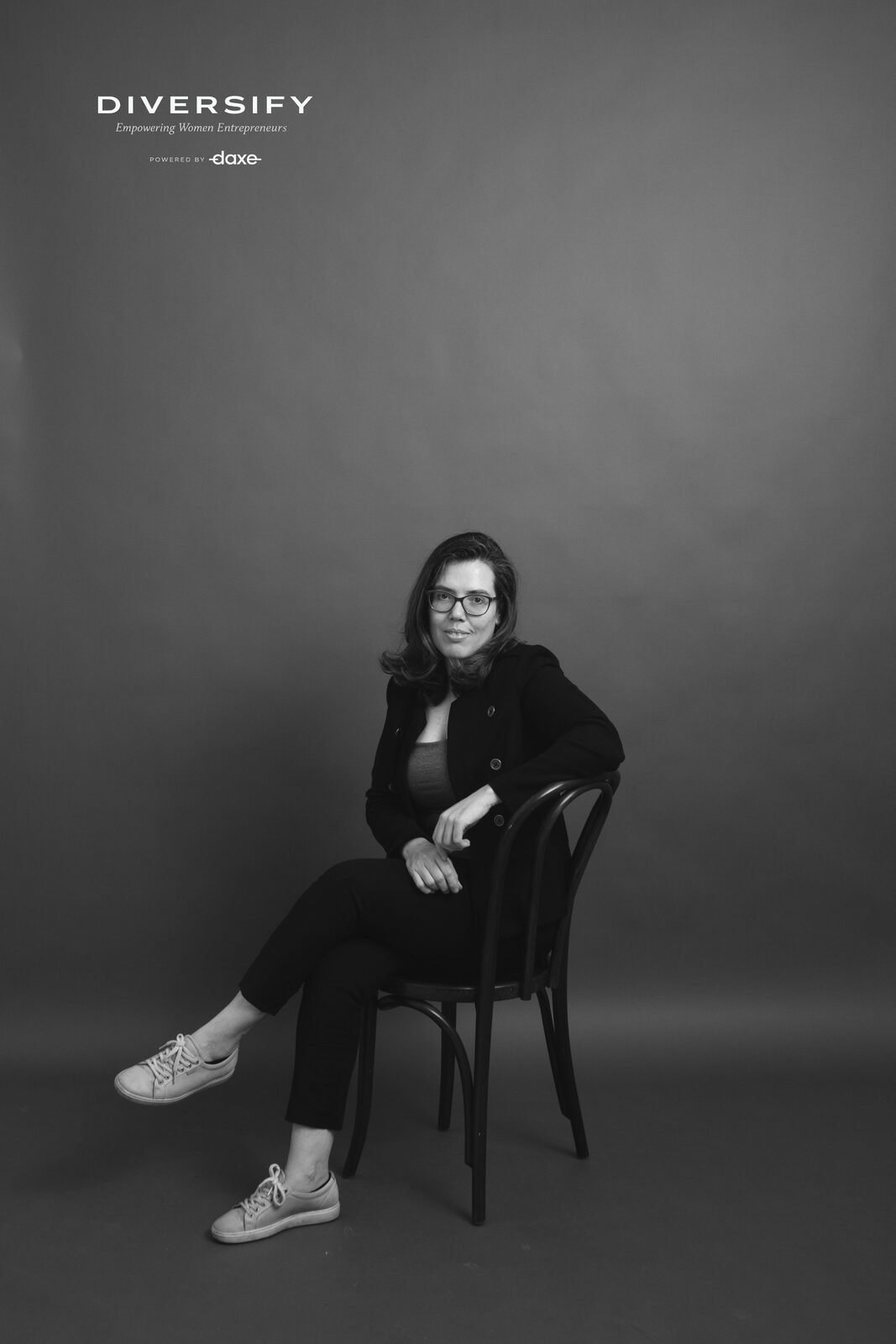
Portrait No. 001
Arzu Sandikci
CEO & Co-founder
Rhea's Factory
Raised — $1.1M
Rhea’s Factory is building biology-powered infrastructure for true textile circularity. We combine AI-designed enzymes with an industrial process to convert polyester and blended textiles back into virgin-quality building blocks that can go straight into new fiber production, without a green premium. I started the company because I couldn’t accept that valuable materials are treated as disposable. As a teenager, I saw an image of a landfill overflowing with “waste” and it stayed with me as a question: why do we extract, manufacture, and then abandon? After years in biotech and industrial scale-up, I realized the missing piece wasn’t intent, it was a scalable system that works with real-world mixed materials and real supply chains. Now is the moment: brands, manufacturers, recyclers, and policymakers are finally aligning around circularity, and we’re positioned to turn that alignment into operating infrastructure.
In her words
“As a woman building industrial systems, strength and empathy are not opposites; they are foundations. The future we’re creating is rigorous, regenerative, and profoundly human.”
Chapter I
The toughest challenges you've faced as a founder.
The hardest part of building Rhea’s Factory hasn’t been the science; it’s been carrying conviction through uncertainty. I left a stable career to build something that didn’t yet have a clear market, clear playbook, or easy path to funding. As a woman founder and an immigrant, I’ve often had to prove credibility twice, in rooms where technical depth was questioned, or where ambition was mistaken for risk rather than resolve. There were moments when capital was scarce, progress felt slow, and the responsibility felt heavy. I learned to be resourceful in ways I never had to be before: stretching limited funding, building partnerships before they were obvious, and finding momentum without permission. I also made hard leadership decisions early on, including walking away from misaligned paths and choosing clarity over comfort. What kept me going was progress. We raised early capital from industry angels and prestigious accelerator, validated our technology at kilogram scale, and earned the trust of partners now exploring real deployment. Each milestone reinforced that resilience compounds. The climb has shaped me into a more decisive, grounded, and confident founder, one who knows how to build through uncertainty, and bring others along with her.
Chapter II
Your vision.
I’m obsessed with the idea that materials should never lose their value. That the objects we make, use, and wear shouldn’t end their lives as waste, but as inputs for what comes next. The problem that keeps me up at night is not just textile waste, but the broken logic behind it: extract, manufacture, discard. What Rhea’s Factory aims to enable is a shift in how the world relates to materials. A future where textiles are designed, recovered, and regenerated as part of a continuous cycle. Where waste becomes feedstock, and circularity is not a compromise, but the default. If we succeed, we help unlock an industry where value is preserved, emissions are reduced at the source, and growth no longer depends on taking more from the planet. We’re building the infrastructure for that future, one where materials are respected, and nothing valuable is thrown away.
Chapter III
The impact you want to leave behind — for your industry, your community, and the women who come next.
Thirty years from now, I want to look back knowing we helped change what society considers waste and who gets to decide that. I want circularity to be so embedded in industry that extracting virgin resources feels outdated. But just as importantly, I want future women, immigrants, and outsiders to see that they don’t need permission to build meaningful, world-shaping infrastructure. That conviction, empathy, and technical rigor can coexist. If Rhea’s Factory leaves behind anything, I hope it’s proof that choosing purpose over convenience can reshape entire systems and that leading with integrity is not a limitation, but a lasting advantage.