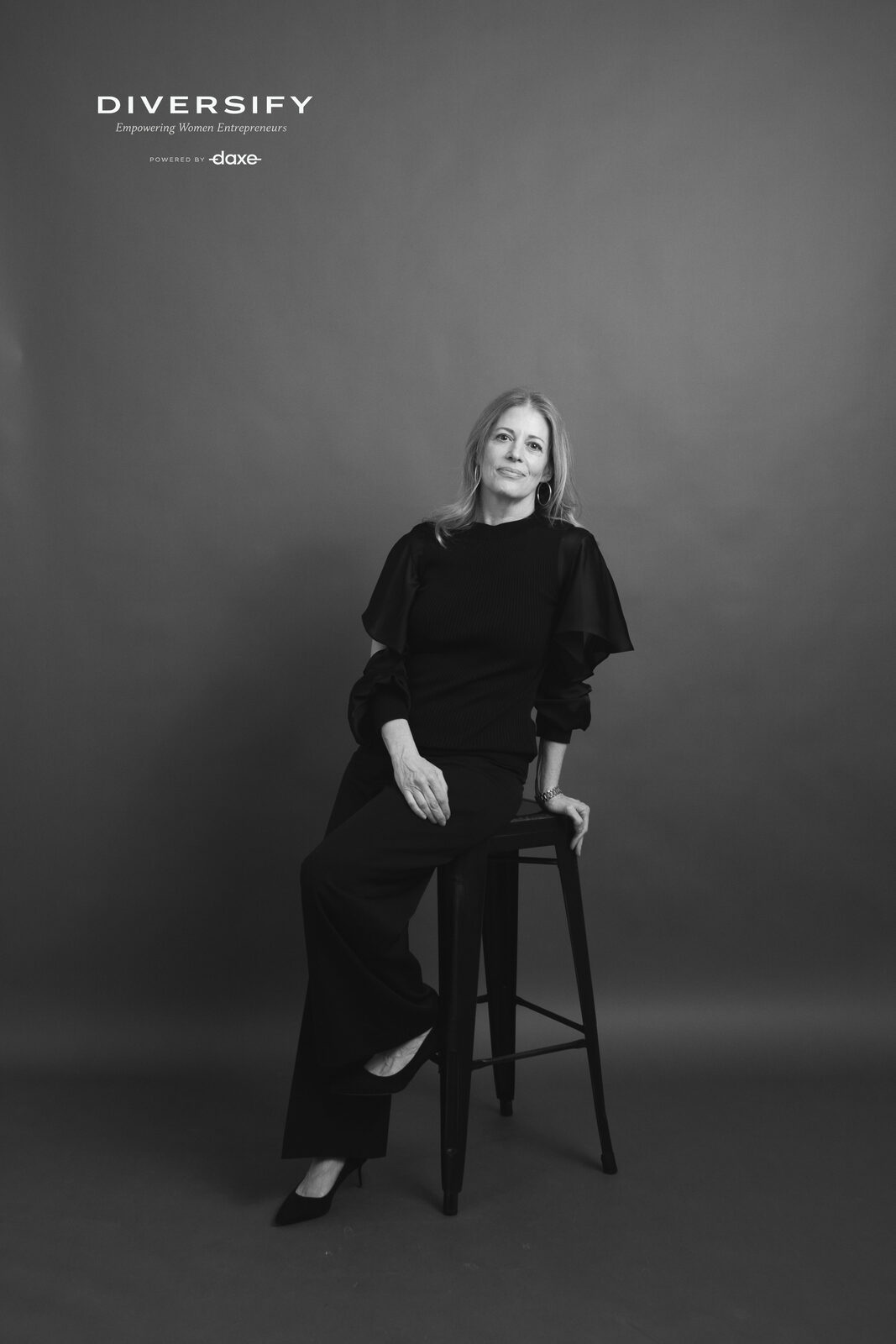
Portrait No. 001
Elli Kaplan
Founder
Neurotrack
I spent my childhood on Native American reservations in Yakima and Oklahoma, where my father served as a pediatrician with the Indian Health Service. I witnessed healthcare at its rawest—brilliant doctors delivering critical care to some of our sickest communities, marginalized and forgotten. Years later, I watched my grandparents disappear into Alzheimer's disease. Again, I saw a population cast aside—our seniors treated not as people confronting a devastating illness, but as lost causes. Two populations. The same injustice: invisible until it was too late. I founded Neurotrack because Alzheimer's is a public health crisis disproportionately devastating women and communities of color. One in three people will face this by age 85—two thirds of them women. My background spanning finance, policy, and business gave me the ability to navigate complex healthcare systems, secure funding, and build solutions that reach underserved populations. With millions at risk, there is no time to waste.
In her words
“I've raised nearly $70 million in venture capital—building Neurotrack into the market leader in early Alzheimer's detection.”
Chapter I
The toughest challenges you've faced as a founder.
Building a company in the Alzheimer's space is not for the faint of heart. The science is deeply complex, the regulatory path unforgiving, and investors are skeptical of a disease where billion-dollar pharma companies have failed spectacularly. Add being a woman raising venture capital, and the hill only gets steeper. I've sat in pitch meetings where investors asked why I wasn't at home with my children. I've been told our approach was \"interesting\" but they've already invested in a female-led company. Over and over, male founders with less traction and smaller markets walked away with term sheets. I think of myself as the cockroach in Alzheimer's disease. Nothing can stop me. I've raised nearly $70 million in venture capital—building Neurotrack into the market leader in early Alzheimer's detection. We're now screening and diagnosing thousands of people daily, delivering dramatically improved patient care in all 50 states. We've achieved 250% revenue growth in the last year, proving that early intervention isn't just possible—it's scalable and profitable. Every \"no\" has only fueled my resolve. Every closed door reminds me of the people in memory care centers who deserved better. And I'm just getting started.
Chapter II
Your vision.
I'm OBSESSED with erasing the stigma and sense of inevitability of Alzheimer's disease. Today, we treat cognitive decline like it's a natural part of aging—something whispered about, hidden or ignored. By the time someone gets a diagnosis, at least a decade of brain damage has already occurred. Families are devastated. Patients lose their autonomy and agency. And we've missed the window when intervention could have changed everything. Through Neurotrack we are rewriting that story. We're making early detection as routine as checking your cholesterol—catching Alzheimer's when your brain can still fight back, when treatments can actually work, when you still have time to make decisions about your own life. The change I'm enabling is this: a world where Alzheimer's isn't a death sentence delivered too late, but a manageable condition caught early. Where our seniors aren't warehoused and forgotten, but empowered with answers and options. That's the future I'm building.
Chapter III
The impact you want to leave behind — for your industry, your community, and the women who come next.
I want to leave behind proof that the hardest problems are worth solving—and that women belong at the helm solving them. For the world, I want early Alzheimer's detection to be as routine as a mammogram. For my community, I want healthcare that fights for the marginalized with the same urgency we'd demand for ourselves. For my daughter, I want her to grow up knowing she doesn't need permission to lead, to build in impossible spaces, to demand better. For future women founders: your perspective isn't a liability—it's your advantage. The world needs what only you can build.