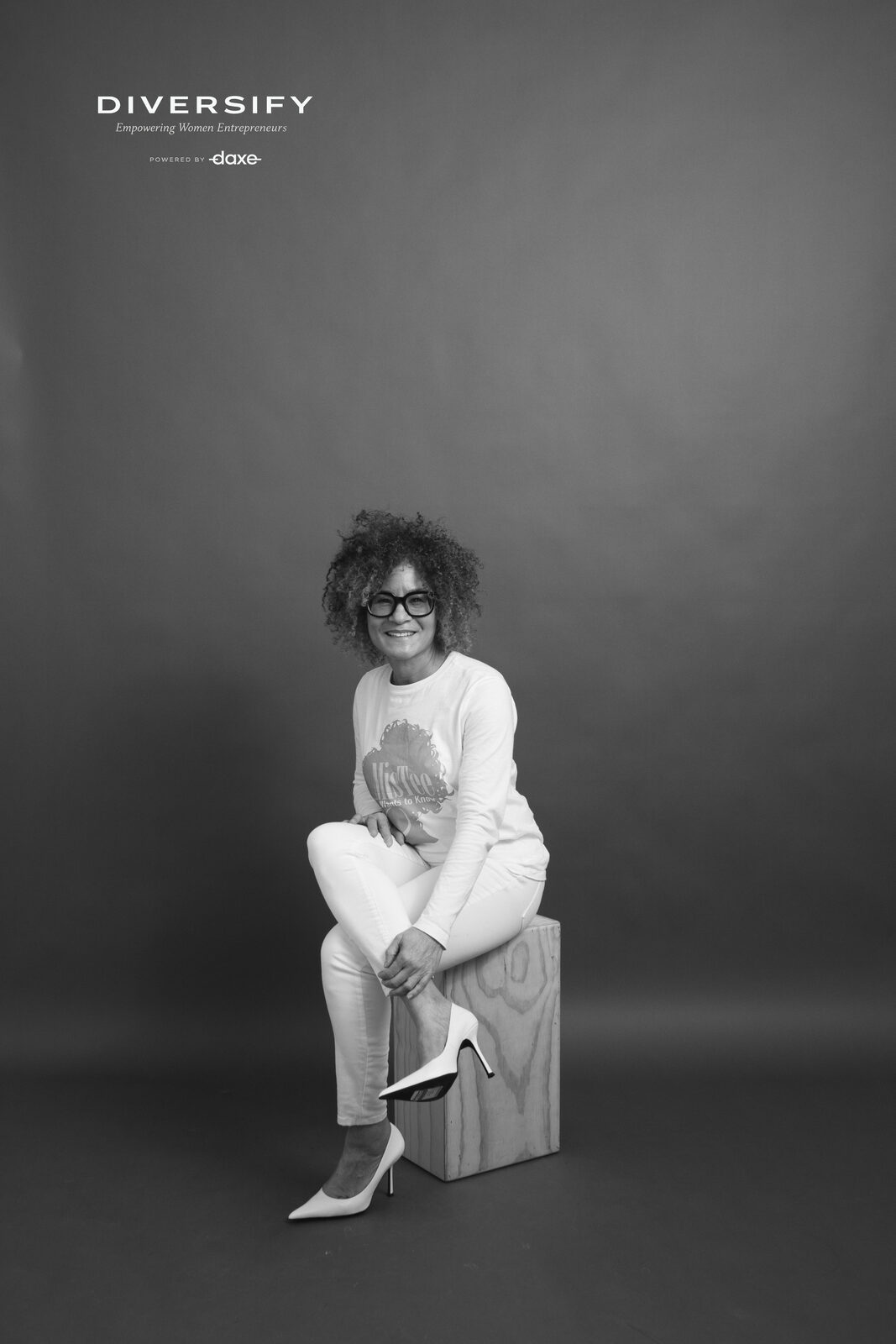
Portrait No. 001
Janice Williams Oliver
Founder/CEO
MisTee Wants To Know, Inc.
Raised — $285k (SAFEs/non-dilutive funding)
When I learned that chemical hair relaxers are linked to cancer, I stopped relaxing/straightening my hair and began wearing it curly/coily. What I thought was a personal health decision quickly revealed a much larger problem. As I searched for tools and products to care for my natural hair, I discovered that major beauty brands like Dyson and L’Oréal do not offer tools designed to maintain or detangle curly/coily hair. Hair like mine was still an afterthought. That realization lit the spark. This wasn’t just a product gap—it was a systemic failure impacting health, identity, and confidence. Why now? The CROWN Act and new cosmetology requirements are empowering more people to wear their hair natural, but innovation hasn’t caught up to demand. Why me? I live this problem every day. MisTee Wants to Know exists because I needed it—and millions of others do too.
In her words
“I launched MisTee Wants to Know, Inc., a P&G Beauty/WWD Media winner after learning from a Harvard study that over 50% of the products sold to Black women contain toxic ingredients like formaldehyde. I am developing USPTO patent approved hardware and software/AI to address curly/coily hair issues in a healthy way.”
Chapter I
The toughest challenges you've faced as a founder.
Hardware is hard—and expensive. As a Kellogg MBA, non-technical Black female founder, I quickly realized that most investors view hardware through a software lens, often underestimating the capital and rigor required for prototyping, customer testing and tooling. Staying resourceful, I built relationships that led to the Rochester Institute of Technology’s Venture Creations Incubator, where I gained access to hardware development support and U.S.-based manufacturing expertise. Still pre-revenue, I generated significant traction: a USPTO-approved patent, a signed LOI with Mayvenn, $285K in funding, and winner of the P&G Beauty/WWD Media competition. Despite solving a critical need for customers who outspend the average consumer 9x in a multibillion-dollar industry, the funding landscape remained an uphill battle. In 2025, a Refinery29 article validated what I knew: people wearing multiple hairstyles needed a hairstyle planner. With no capital, I got creative. Made the cut for October 2025 Detroit pitch competition and impressed the right people because I met my software engineer who was encouraged to meet me. Fast forward, in January 2026, we launched the MisTee AI Hairstyle Planner, now generating revenue with 50+ subscribers. It allows us to collect data and build customer relationships before launching the MisTeePRO detangler in 2027.
Chapter II
Your vision.
Over 65% of the world has curly/coily hair—yet hair tools are designed to straighten, not care for it. A Harvard study found that 50% of hair products marketed to Black women contain harmful chemicals such as formaldehyde and phthalates, compared to only 7% of products marketed to white women. These disparities contribute to why there are hair and health issues in this ethnic group. Nearly half (47.6%) of African-American women reported hair loss at the crown or top of the scalp, according to the Black Women’s Health Study at Boston University. MisTee Wants to Know exists to change this. Our vision is to provide safe, non-toxic tools and resources empowering people with curly/coily hair to practice healthy hair care. We also address the psychological barriers—from stigma to internalized bias—that impact confidence, self-image, and the ability to truly love and care for curly/coily hair.
Chapter III
The impact you want to leave behind — for your industry, your community, and the women who come next.
Having spent years immersed in Bay Area culture—frequenting events at MIT/Stanford Venture Lab, PARC/SRI, and the Computer Science Museum — I have witnessed how Silicon Valley’s world-renowned success is built on the symbiotic relationship between academic institutions, startups and entrepreneurs. My dream is to replicate this infrastructure within the HBCU ecosystem. My vision is to provide students with cutting-edge, innovative exposure and critical seed funding, mirroring the foundational ties Stanford University maintains with its spin-offs. By formalizing this pipeline, we will cultivate a strong entrepreneurial culture that generates alternative income streams for HBCUs through licensing revenue and equity stakes.