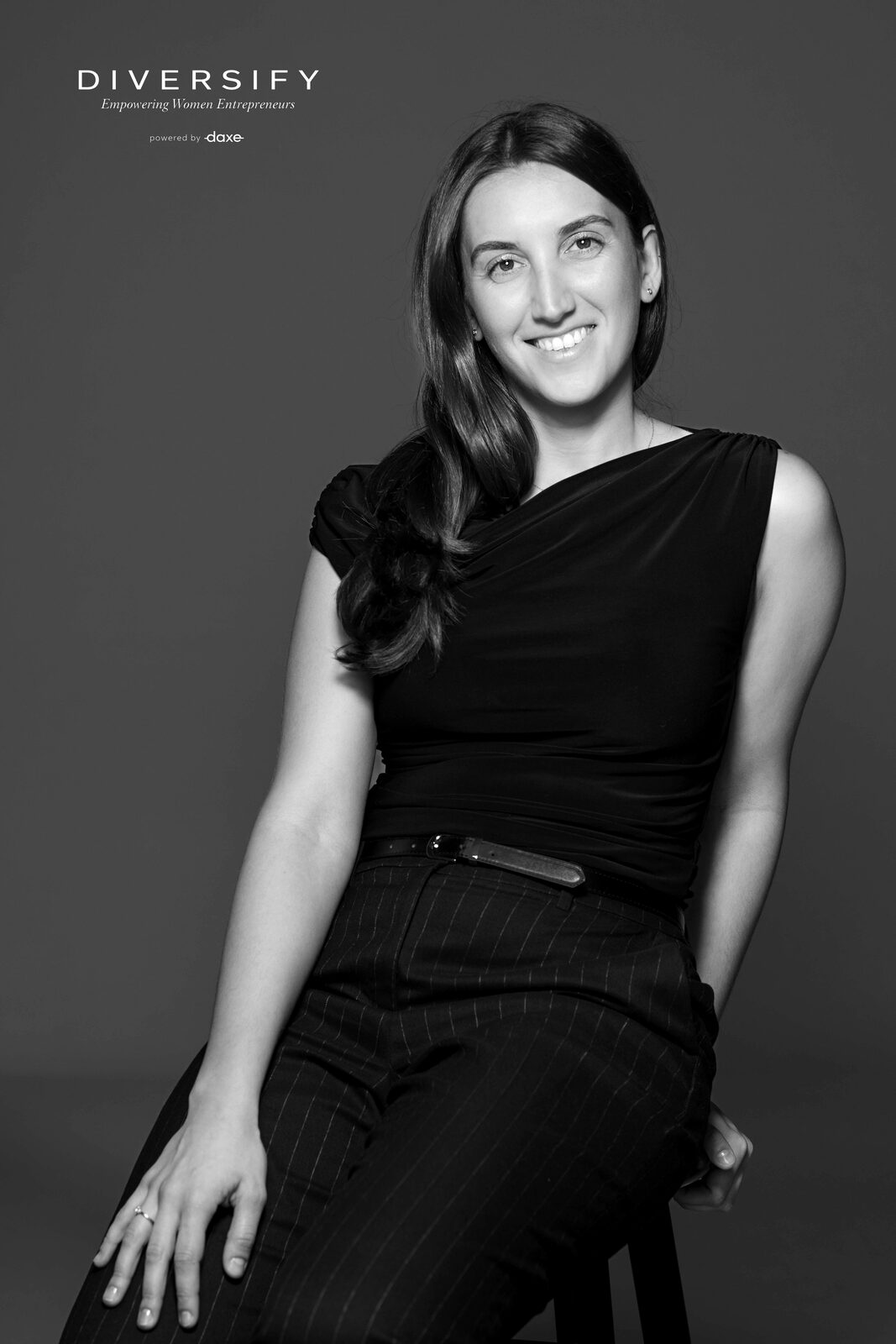
Portrait No. 001
Naroa Gimenez
CEO & Co-Founder
ORAIN Biotechnologies
As a scientist, I have always been driven by the desire to improve patients’ lives. However, throughout my career in oncology research, I kept witnessing the same reality—extraordinary science, years of effort, and millions in investment ending in failure. In drug development, only about 1 out of 9 candidates ultimately makes it to market. That means the majority of discoveriesn are abandoned, often because we cannot clearly identify which patients will truly benefit. Behind every failed trial is not just lost capital, but lost time for patients waiting for better options. That was a turning point for me. We are generating incredibly rich spatial and molecular data, yet we don't have the right tools to fully interpret it or translate it into meaningful biomarkers. I co-founded ORAIN to help close that gap—to reduce wasted research, unlock hidden value from clinical data, and work closely with biotech and pharma teams to make drug development smarter, more precise, and ultimately more human.
In her words
“I believe data becomes powerful when it changes a patient’s outcome.”
Chapter I
The toughest challenges you've faced as a founder.
Building ORAIN while being a full-time academic scientist is the hardest—and most transformative—challenge of my life. I am building a deep-tech AI company in spatial biology while teaching, mentoring, publishing, and navigating strict institutional conflict-of-interest frameworks. I work weekends and late nights. There is no clean separation between roles—just a constant commitment to making it work. As a woman founder in AI and biotech, I am often the only woman in the room. I have to prove repeatedly that I am not “just the academic,” but the technical co-founder shaping the biology, clinical vision, and product strategy. As an immigrant, I navigate two regulatory systems, two funding ecosystems, and two business cultures simultaneously. But hard work creates momentum. Our AI has been validated in 8+ peer-reviewed publications and used across multi-institutional studies. We are working on our first pilot project and we are now raising capital to scale our platform.
Chapter II
Your vision.
I’m obsessed with changing the paradigm of clinical trials. Today, too many trials fail not because the science is wrong, but because we don’t truly understand which patients will benefit. Every failed trial represents years of work, billions of dollars, and most importantly, patients who simply ran out of time. I envision a world where clinical trials are no longer blind bets, but data-guided decisions—where spatial and molecular information is deeply understood before a drug ever reaches Phase III. ORAIN exists to help make that shift real. If we succeed, drug development becomes smarter, faster, and more human.
Chapter III
The impact you want to leave behind — for your industry, your community, and the women who come next.
I hope to have helped shift the culture of drug development—from trial-and-error to biology-first precision. I want to be proud that we reduced unnecessary failures, accelerated access to effective therapies, and made clinical trials more humane and intentional. But beyond industry impact, I hope my legacy shows future women scientists that they don’t have to choose between academia and entrepreneurship, or between science and leadership. You can build, lead, invent, and still stay deeply rooted in purpose. If ORAIN helps redefine both how we develop drugs and who gets to lead that change, that will be a legacy worth leaving.