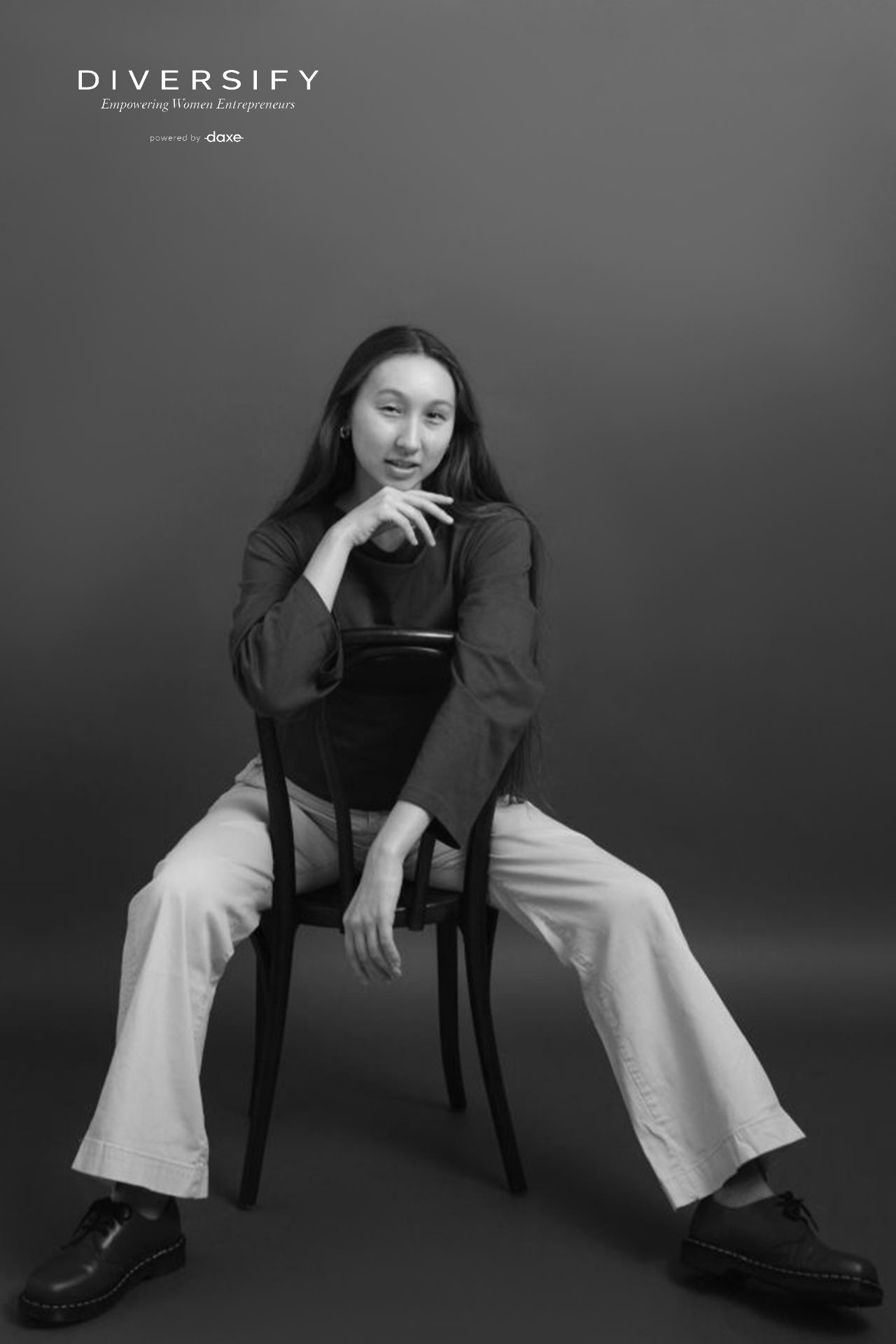
Portrait No. 001
Roxana Grunenwald
Founder
Zinc2
I started Zinc Two for a younger version of myself: someone curious, technical, and ambitious, but often talked down to as a “silly little girl” for wanting to build in spaces that didn’t expect her to belong. I saw how many talented engineers and scientists quietly step away from innovation not because they lack ability, but because they lack belief, access, or community early enough to stay. Zinc Two is a global platform forming deep tech founders through fellowships, hacker houses, and venture programs that prioritize environment over pedigree. Instead of waiting for credibility signals, we create conditions where builders can find conviction, collaborators, and direction before traditional systems recognize them. We’re entering a moment where technology will reshape everyday life, yet participation remains narrow. Zinc Two exists to widen who gets to build -- so fewer people grow up thinking the future isn’t theirs to shape.
In her words
“Hardware is eating the world. Stop starving the engineers.”
Chapter I
The toughest challenges you've faced as a founder.
One of the toughest challenges of building Zinc Two has been learning to lead while managing a serious autoimmune condition. I’ve built much of this company between medical treatments, insurance battles, and periods of physical uncertainty, while traveling and operating a rapidly growing global organization. It forced me to rethink resilience: not as burnout or endurance, but as sustainability and strong personal boundaries. As a queer woman and minority founder in deep tech and venture spaces, I’ve often entered rooms where I was underestimated before my work spoke for itself. Early credibility isn’t evenly distributed, and I learned quickly that I would need to build proof, not just pitch vision. Despite this, Zinc Two has grown into a global deep tech ecosystem of 10,000+ engineers, scientists, and founders across 50+ countries. We’ve launched fellowships, hacker houses, and accelerator programs supporting founders entering biotech, robotics, climate, and hardware -- with companies forming, raising capital, and partnering with leading investors, universities, and industry operators. The climb has been personal as much as professional. Building Zinc Two meant learning how to succeed without sacrificing health or identity -- and proving that ambitious systems can be built differently.
Chapter II
Your vision.
Only 2.3% of venture capital funding went to all-women founding teams in 2024, while more than half of young adult households under 30 now live with at least one chronic health condition -- a number that continues to rise. Yet our innovation economy still assumes founders are financially secure, physically unlimited, and able to tolerate extreme instability. I’m obsessed with this mismatch between who innovation systems are built for and who actually lives in the real world. Zinc Two is building the innovation and financial infrastructure to underwrite these nontraditional risk profiles. Through fellowships, shared research environments, and a live research studio, we help emerging builders develop consequential technologies. Alongside this, we’re raising a dual-structure fund to underwrite these nontraditional risk profiles, increasing the number of women and resilience who can build a better future. Ultimately, we aim to support women and underrepresented engineers early and be the earliest believers in technologies that create a superabundance of scientific discovery.
Chapter III
The impact you want to leave behind — for your industry, your community, and the women who come next.
Thirty years from now, I hope fewer young engineers and scientists feel like they have to wait for permission to start building. That people aged 18–28 — especially women, queer founders, and those living with chronic illness — no longer age out of ambition before they ever get a real chance to work on the systems that matter: energy, manufacturing, biotechnology, infrastructure, and the physical technologies shaping everyday life. I want Zinc Two’s legacy to be simple: more brilliant young builders believed they belonged in solving consequential problems. They started labs and companies earlier, took technical risks sooner, and didn’t have to sacrifice their health or identity to participate in critical industries. If we succeed, progress won’t hinge on a single breakthrough, but on an entire generation able to stay in the work long enough to materially change the world.