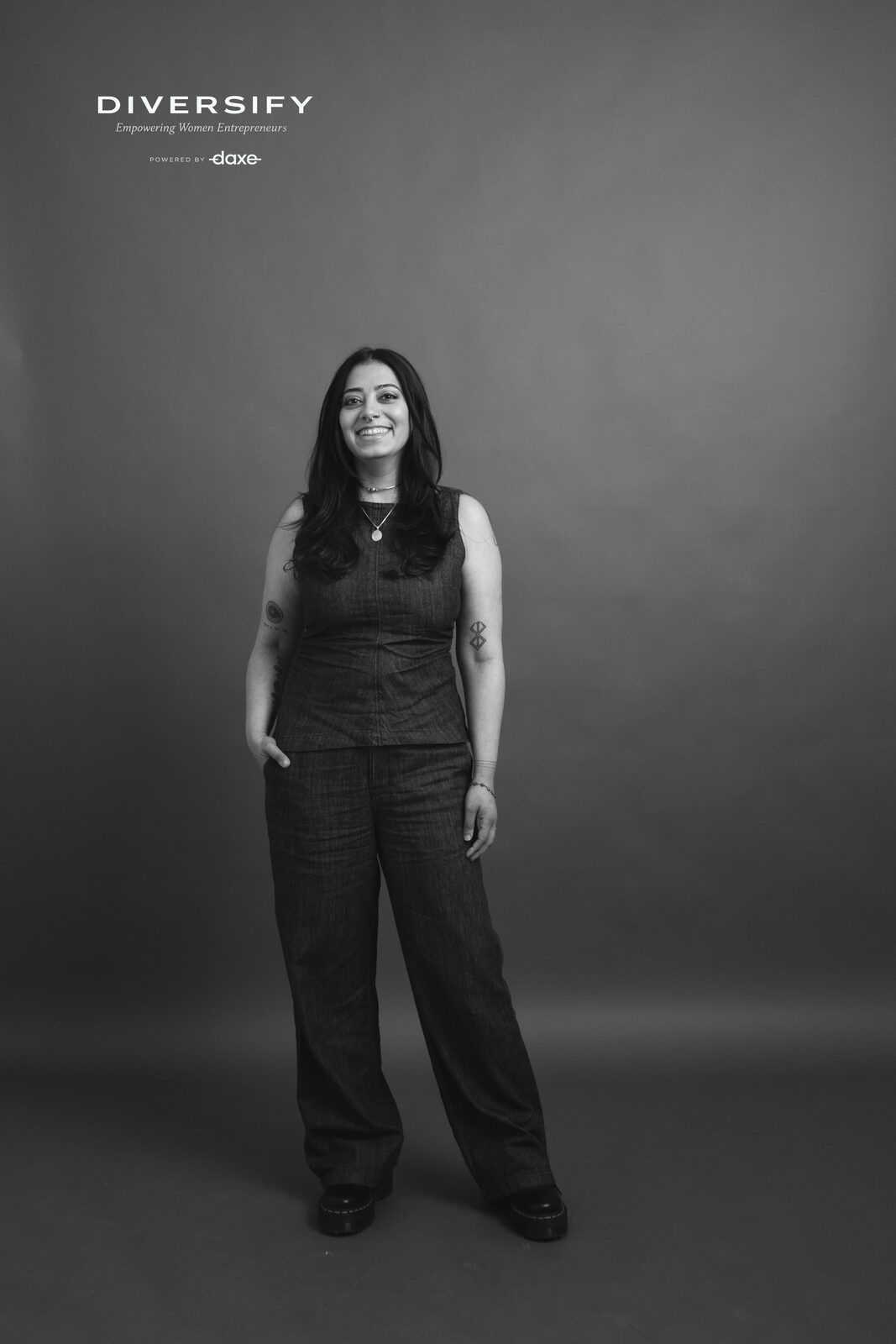
Portrait No. 001
Tooba Durraze
Founder
Amoeba AI
I started Amoeba because I was exhausted by watching important decisions get made badly and the lack of curiosity around what would be possible with data. I was infatuated by Polanyi's paradox \"We know more than we can tell\" and wanted to build something that held that same principle for data. I actually was more obsessed with the problem than starting a company, but the fact that this wasn't being solved, and fast enough made me feel like I needed to be the one to solve it, to change the human-data interaction model completely. I spent years building models, dashboards, and forecasts, only to watch executives argue over whose numbers were “right.” I’d sit in rooms where layoffs, budgets, and strategy were being debated, and I knew the data could answer the question but it wasn’t structured to help humans decide. It was structured to report. As an immigrant and a woman in deeply technical spaces, I also felt how power concentrates around those who can translate complexity. I didn’t want insight to belong only to the loudest voice or the most technical person in the room. I started Amoeba because I believe decisions should be guided by evidence people can actually understand - and because I couldn’t accept that confusion had become normal.
In her words
“I actually was more obsessed with the problem than starting a company, but the fact that this wasn't being solved, and fast enough made me feel like I needed to be the one to solve it, to change the human-data interaction model completely.”
Chapter I
The toughest challenges you've faced as a founder.
The hardest part has been trusting myself when the world kept asking me to be smaller. I’ve been told - directly and indirectly - to narrow the vision, to make it “more like existing tools,” to wait until I had more permission. As a woman and an immigrant founder building deep AI, skepticism shows up early and often. I’ve walked into investor meetings where I had to prove credibility before I could even explain the idea. There were moments where fundraising stalled, enterprise sales stretched longer than our runway liked, and I was building while carrying the emotional weight of being the single point of failure. There is no off switch when you’re responsible for your team, your customers, and your own belief. What kept me going was seeing Amoeba surface risks and opportunities customers genuinely didn’t know were there - pipeline fragility, spend inefficiencies, signals buried across systems. We turned that into real revenue, real usage, and real trust. The climb taught me resilience, but more importantly, clarity. I stopped trying to be palatable and started building exactly what I wish I’d had earlier in my career.
Chapter II
Your vision.
I’m obsessed with the quiet damage caused by delayed and misaligned decisions. I’ve seen teams do “everything right” on paper - great tools, great people, great data and still drift because no one could confidently say what mattered most right now. Meetings filled the gap where clarity should have been. I want to change how organizations experience decision-making. I want intelligence to feel like a partner something that watches the system continuously, flags what’s changing, and helps humans act before the cost becomes visible. If Amoeba succeeds, fewer leaders will have to rely on gut feel under pressure. Fewer teams will argue over whose dashboard is right. And fewer people will be impacted by decisions made too late or without context. I’m building Amoeba so that insight arrives when it can still change the outcome - not after the damage is already done (and hopefully leave more room for the human curiosity)
Chapter III
The impact you want to leave behind — for your industry, your community, and the women who come next.
As a woman and an immigrant founder, I want to help change who gets to build the systems that shape how decisions are made. In my industry, that means moving companies beyond surface-level analytics toward intelligence that reflects real complexity, context, and consequence. I’m proudest of building deeply technical products without compromising my perspective or voice. For future women, especially immigrants, I want to leave proof that you don’t need to fit the mold to lead, that rigor and empathy can coexist, and that building ambitious things is not an exception reserved for a few, but an expectation open to all.