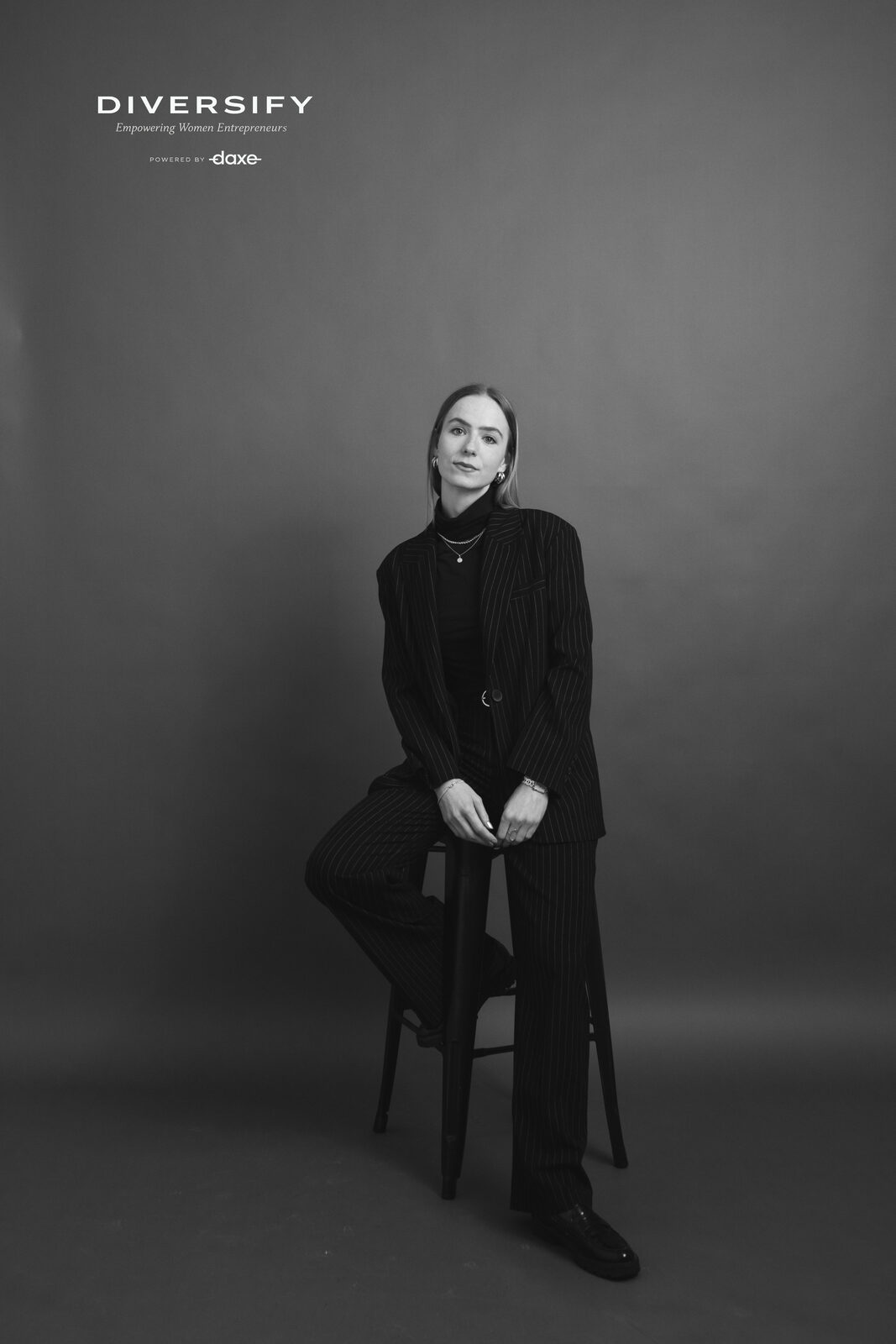
Portrait No. 001
Helene Borrmann
CEO
TriasBio
The Language of Life My journey into RNA design didn't start in a boardroom, but at the bench at Oxford and Berkeley. For years, I obsessed over the intricate \"clockwork\" of biology - how circadian rhythms and pathogens engage in a silent, high-stakes dance. I saw firsthand that biology isn't a series of static snapshots; it is a dynamic, temporal language. The \"spark\" came when I realized that while the industry was rushing to adopt mRNA, we were still \"speaking\" to cells in broken sentences. We were treating RNA as a simple delivery vehicle rather than a sophisticated code. I saw a massive gap: the world had powerful AI tools, but they lacked the deep biological nuance required to master expression dynamics. I founded TriasBio because I couldn't ignore the injustice of life-saving therapeutics failing simply because we couldn't optimize their \"timing\" or expression. With my background in circadian biology and the tech-forward ecosystem of Silicon Valley, I knew I was uniquely positioned to build the bridge. Now is the moment because generative AI has finally reached the point where we can move beyond trial-and-error and start fluently architecting the Language of Biology.
In her words
“The hardest problems in science require the most diverse perspectives - we will only solve the impossible when we include every voice.”
Chapter I
The toughest challenges you've faced as a founder.
Transitioning from the deliberate pace of Academia to the high-velocity world of venture-backed biotech was a psychological shock. In academia, you seek truth; as a founder, you seek survival. The climb has been a relentless lesson in grit, especially as an all-female, all-immigrant founding team navigating a space where the system isn't naturally designed for us. My biggest hurdle wasn’t the science, it was the legal and structural friction. I hit a wall before I even started: I couldn't legally incorporate TriasBio for months due to visa restrictions. Navigating that agonizing timeline while trying to maintain momentum felt like running a marathon with weights on my ankles. This wasn't a solo battle; as two female immigrant founders in a male-dominated deep-tech sector, we faced a constant \"expertise tax,\" where our technical pedigree was scrutinized far more strictly than our male peers. Fundraising in this \"biotech winter\" has been the ultimate test of resilience. While many were pulling back, we leaned in. We fought through the skepticism to close our funding. Today, we’ve scaled to a high-performing team of five, proving that even when the system isn't built for you, you can still architect the future.
Chapter II
Your vision.
I am obsessed with the fact that while we have decoded the human genome, we still cannot \"program\" biology with any real predictability. We treat life as a static map, ignoring that every cell in our body operates on a rhythmic, temporal logic. Currently, drug discovery is a game of high-stakes guessing, where life-saving RNA therapeutics often fail simply because we cannot master their expression timing or structural stability. TriasBio will enable a world where \"undruggable\" diseases become programmable software problems. By bridging generative AI with systems biology, we are moving beyond simple protein expression toward \"time-aware\" therapeutics that align with the body's clock. We are building the infrastructure that allows us to not just ask what a drug does, but when and how it acts, transforming medicine from a series of shots in the dark into a precise, digital architecture for human health.
Chapter III
The impact you want to leave behind — for your industry, your community, and the women who come next.
Thirty years from now, I want to look back on a world where the \"Language of Biology\" is as predictable as code, ending the era of trial-and-error medicine. Beyond the technology, my legacy will be the bridge I’ve built for the next generation of immigrant and female founders. I want to redefine the transition from academia to industry, turning \"insecure overachievers\" into empowered builders. I hope to be the proof that technical depth is the ultimate leadership asset, inspiring young PhDs to realize their true value and move beyond the bench to architect global systemic change.