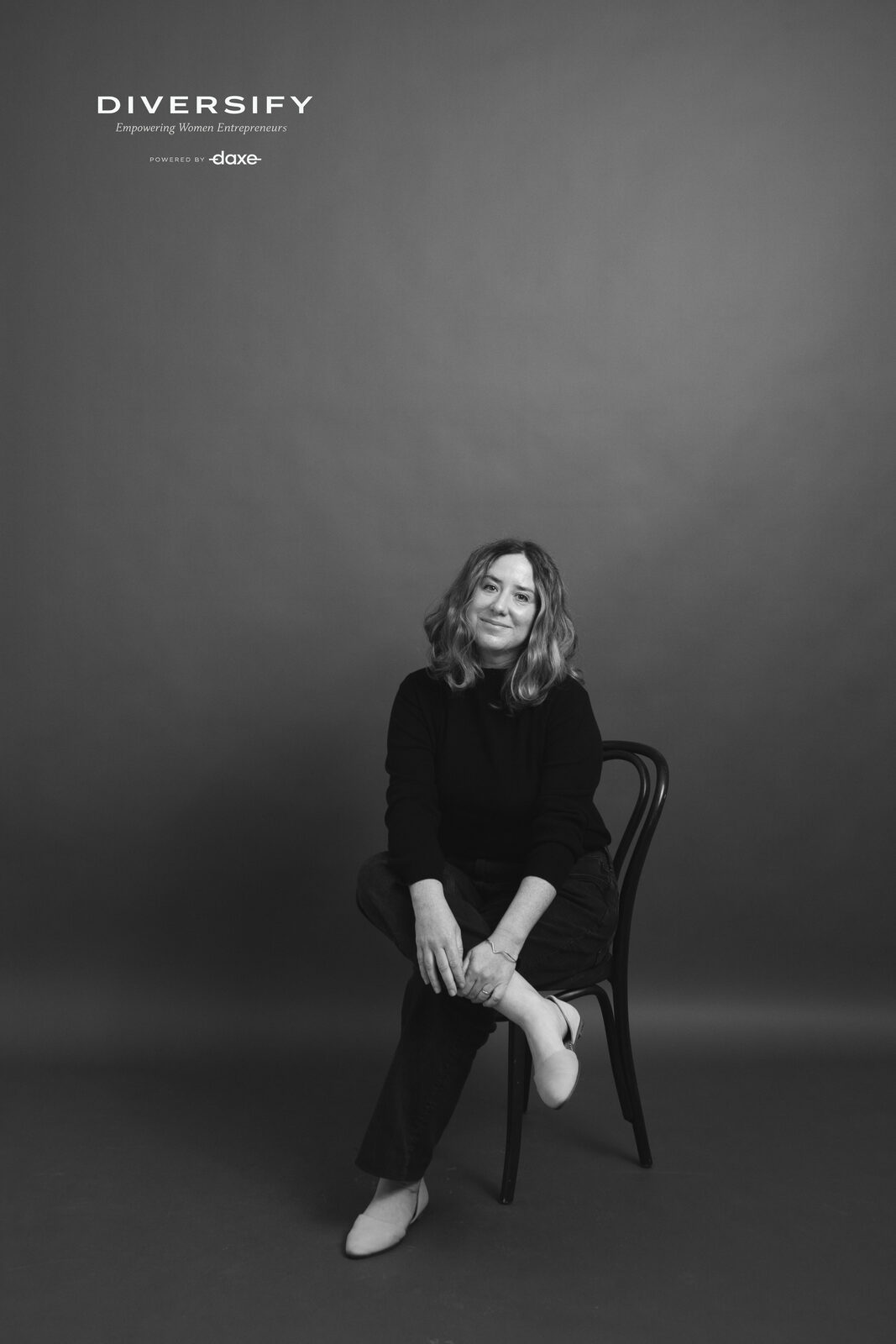
Portrait No. 001
Laura Lynn Gonzalez
CEO
Dynamoid | 10k Science
Raised — $2.5M ($2M non-dilutive SBIR)
I built 10k Science to turn science data into science content, leveraging my background in fine arts, 3D graphics, science, and technology. Some key moments along the way: I developed drawing skills because I wanted to draw as well as my cousin, and classmates really liked my drawings. Later, I found that I was really good at biology: I could read, memorize, and visualize complex systems in detail. The cute boy in my biology class was impressed, and I helped him study. In college, I discovered protein 3D structures - that these abstract diagrams represented real shapes, revealed through cutting-edge microscopy. I wanted to put them together to make complete 3D worlds of thousands of structures. There was a lot of interest from science centers, who supported my early grant writing efforts. For me, it wasn't one spark but a slow burn; a natural progression of interests, positive feedback, and talent.
In her words
“I built 10k Science to turn science data into science content, leveraging my background in fine arts, 3D graphics, science, and technology.”
Chapter I
The toughest challenges you've faced as a founder.
The biggest challenge has been confronting the fact that launching a product is only the beginning. Like giving birth, you think about the event itself as the culmination of all of this work, but actually the real work is only beginning. At the same time, the work gets more and more rewarding as your effort compounds. In 2010, I won a highly-competitive grant from the National Science Foundation for $150K to create the app, Powers of Minus Ten, where you interactively zoom from the human hand down to the molecular level. It got over 600,000 downloads and was in the seminal iPad 2 commercial, \"Alive\", shown globally. But because the content production pipeline was too manual, I couldn't produce enough content to build the business around it. So I started automating that pipeline (with AI now among other technologies) and bootstrapped a new product, 10k Science. I’ve since won another competitive $2M grant from the National Institutes of Health to bring the product to market, along with funding from 500 Global as part of their flagship accelerator. We now have multiple paid school pilots and a growing consumer subscriber base.
Chapter II
Your vision.
I want to accelerate scientific discovery. I think we are just scratching the surface of what is possible with new communication technologies using 3D and AI to visualize and communicate science data. Scientists generate more data every day, much of it 3D and poorly served by 2D screens. There is a huge opportunity to create better communication methods to help scientists collaborate. At the same time, it’s difficult for many students to understand abstract scientific concepts through traditional methods (we’re still using textbooks in 2026??). We bring the work of scientists directly to students, helping them understand real research. This creates a flywheel where students go on to become scientists, accustomed to communicating in this way. They communicate better and faster, discover more, and that progress is seamlessly propagated to the next generation.
Chapter III
The impact you want to leave behind — for your industry, your community, and the women who come next.
I hope my legacy is helping make science more visible, more usable, and more human. I want future students to expect that science can be explored, not just described, and that real research is something they can engage with early on. If I’ve done my job well, the tools we build will quietly change how scientists communicate and how students learn, without needing explanation. And for women building technical systems, I hope my work helps normalize the idea that rigor, creativity, and infrastructure-building can coexist (and don’t require permission).